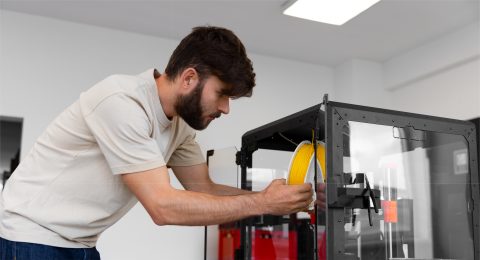
3D printing, also known as additive manufacturing, is revolutionizing the way we create and manufacture objects. This innovative technology allows for the creation of three-dimensional objects from a digital file, layer by layer, using various materials such as plastics, metals, and even biological cells1.
How Does 3D Printing Work?
The process begins with designing a 3D model using computer-aided design (CAD) software. Once the design is complete, the file is sent to a 3D printer. The printer then reads the file and starts creating the object by depositing material layer by layer until the final product is formed2.
Applications of 3D Printing
3D printing has a wide range of applications across various industries:
- Healthcare: Custom prosthetics, dental implants, and even bioprinting of tissues and organs.
- Automotive: Rapid prototyping of parts, custom tools, and even entire car components.
- Aerospace: Lightweight parts for aircraft and spacecraft, reducing weight and improving fuel efficiency.
- Consumer Goods: Custom jewelry, footwear, and household items.
- Education: Hands-on learning tools and prototypes for engineering and design students.
Benefits of 3D Printing
- Customization: Easily create custom objects tailored to specific needs.
- Speed: Rapid prototyping allows for quick iteration and development.
- Cost-Effective: Reduces waste and material costs by using only the necessary amount of material.
- Complexity: Capable of producing intricate designs that would be impossible with traditional manufacturing methods1.
Getting Started with 3D Printing
If you’re interested in exploring 3D printing, here are a few steps to get started:
- Learn the Basics: Familiarize yourself with the different types of 3D printers and materials.
- Choose a Printer: Select a 3D printer that fits your needs and budget.
- Design Your Model: Use CAD software to create your 3D model or download pre-made designs from online repositories like Thingiverse3.
- Print Your Object: Follow the printer’s instructions to print your design.
- Post-Processing: Depending on the material, you may need to clean, sand, or paint your printed object.
3D printing is an exciting and rapidly evolving field with endless possibilities. Whether you’re a hobbyist, a student, or a professional, there’s something for everyone in the world of 3D printing.
3: Thingiverse 1: Wikipedia 2: 3DPrinting.com
Have you ever tried 3D printing, or are you planning to start? I’d love to hear about your experiences or any projects you’re working on!