Bioenergy bridges the gap between waste management and power generation. We dive into the circular economy of biomass, explaining technologies like gasification and anaerobic digestion. Learn how organic waste becomes fuel and navigate the complex debate surrounding carbon neutrality and…
Introduction
Wind and solar generate electricity, but they can’t easily fuel an airplane or provide high-grade industrial heat. Enter Bioenergy. By converting organic matter into fuel, biomass serves as a versatile, dispatchable renewable source—if managed sustainably.
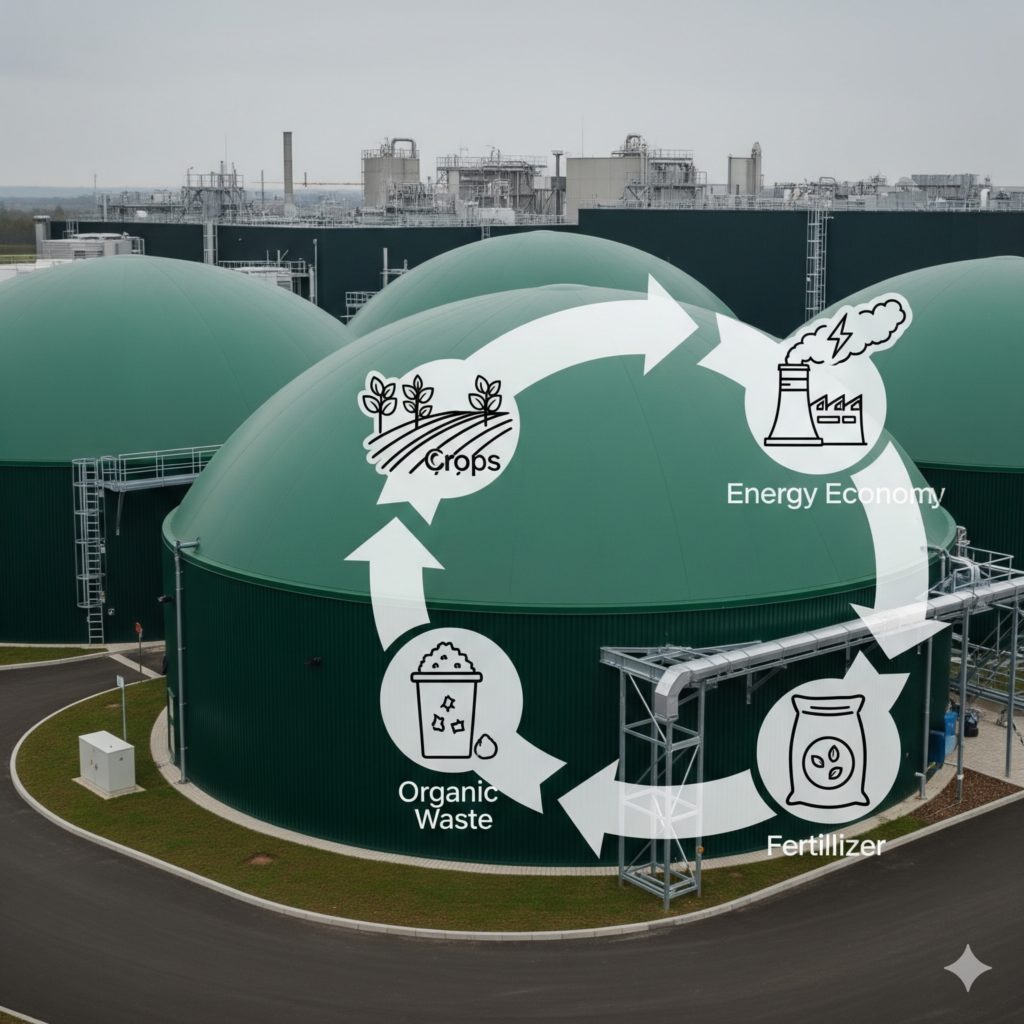
Purpose: The Circular Energy Loop
Biomass utilizes the carbon cycle. Plants absorb CO2; we use the plants for energy, releasing that CO2 back. Theoretically, this is carbon neutral.
- Waste-to-Energy: Solving two problems at once: waste management (landfill reduction) and energy generation.
Inputs: Feedstocks
- First Generation: Food crops (corn, sugarcane). Controversial due to “food vs. fuel” debate.
- Second Generation: Agricultural residues, wood chips, waste oils.
- Third Generation: Algae (high yield, no land competition).
Conversion Technologies
- Direct Combustion: Burning wood/waste for heat/steam (Rankine cycle).
- Anaerobic Digestion (AD): Bacteria break down organic waste in the absence of oxygen to produce Biogas (methane), which can be upgraded to Renewable Natural Gas (RNG).
- Gasification: Heating biomass with limited oxygen to produce “Syngas” (Hydrogen + Carbon Monoxide).
Process Steps: Assessing Viability
- Feedstock Security: The #1 failure reason for biomass plants is running out of consistent fuel. Long-term supply contracts are mandatory.
- Logistics: Biomass is low density. Transporting straw or chips over long distances burns more energy than the feedstock contains. Plants must be local to the source.
Pitfalls: The Carbon Debt
Burning a tree releases carbon instantly, but the new tree takes 50 years to grow back. This “carbon lag” is a major criticism. Sustainable forestry certification (like FSC) is crucial to ensure bioenergy is truly green.
Example: Biogas in Agriculture
Large dairy farms are covering manure lagoons with digesters. They capture the methane (which is 80x more potent than CO2 as a greenhouse gas) and use it to power the farm. The byproduct (digestate) is a high-quality, odorless fertilizer. A perfect circular economy example.