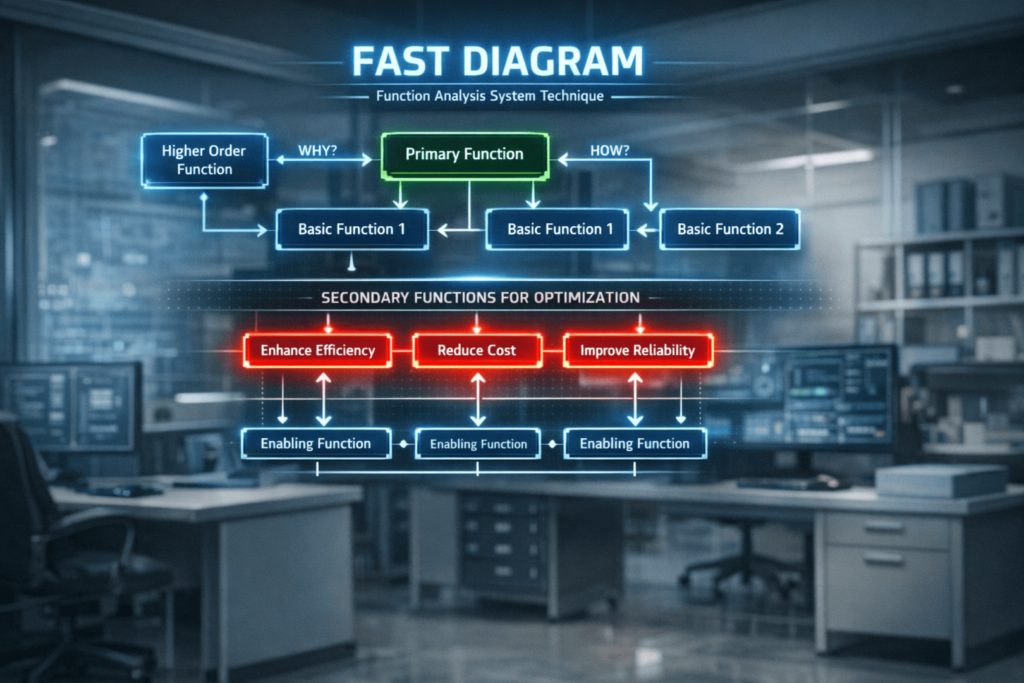
The Presentation Phase secures approval. With a crisp value story, evidence-backed results, clear economics, and risk responses, teams earn the green light to implement VE recommendations. Structure and clarity make the difference between ideas and action.
Introduction
The Presentation Phase is the culmination of Value Engineering. After weeks of analysis, creativity, evaluation, and development, the team must now communicate recommendations clearly and persuasively to decision-makers. This phase is about storytelling, evidence, and confidence. A well-prepared presentation secures approval, while a weak one risks losing momentum—even if the technical work is sound.
Purpose of the Presentation Phase
- Earn approval: Convert recommendations into funded, scheduled actions.
- Tell the value story: Connect functions, creativity, evaluation, and development into one coherent arc.
- Address concerns: Preemptively answer risks, impacts, and readiness questions.
- Build trust: Demonstrate transparency and thoroughness.
This phase answers: “Why should we approve and implement these recommendations now?”
Structure of a Compelling Presentation
- Executive summary
One page: context, recommendations, value metrics, decision required. - Value story
Begin with the basic function and cost drivers. Show how functions guided ideation and selection. - Evidence
Present performance validation, cost models, sensitivity tests, and pilot outcomes. - Risk and mitigation
Outline clear plans with owners and triggers. - Implementation plan
Provide timeline, resources, procurement, and change management. - The ask
State explicitly what approval is required—budget, scope, schedule, and conditions.
Process Steps (Checklist)
- Audience analysis
Tailor the narrative to decision-makers’ priorities. - Slide architecture
10–14 slides, each with a single message. Avoid clutter. - Pre-brief key stakeholders
Resolve surprises before the meeting; secure informal sponsorship. - Rehearsal and Q&A bank
Prepare concise answers to likely questions. - Approval artifacts
Decision memo, sign-off forms, and next-step triggers.
Tools and Templates
- Presentation deck template (message-led slides)
- Executive summary one-pager
- Q&A bank (objections and responses)
- Decision memo (clear, actionable approval wording)
Deliverables and Acceptance Criteria
- Presentation deck and one-pager: Finalized and versioned.
- Approval decision: Signed and recorded.
- Next steps: Implementation kickoff scheduled.
Acceptance criteria:
- Message clarity; evidence cited.
- Risks and mitigations explicit.
- Decision and responsibilities unambiguous.
Common Pitfalls
- Data dumping: Overwhelming slides without a clear message.
- No explicit ask: Recommendations presented but no request for approval.
- Ignoring objections: Risks minimized rather than answered.
- Weak storytelling: Failing to connect functions to value.
Example (Mini Case)
A VE team presented three recommendations: modular heat recovery, pump resizing, and control tuning. The deck led with the basic function and cost driver. Sensitivity analyses showed robust economics under energy price swings. A pre-brief resolved supply chain concerns, and the meeting concluded with phased approvals tied to pilot milestones. The clarity of the “ask” ensured immediate action.
Transition to Implementation
With approval secured, recommendations move into execution under project governance.CTA: Download the presentation template and executive summary one-pager.